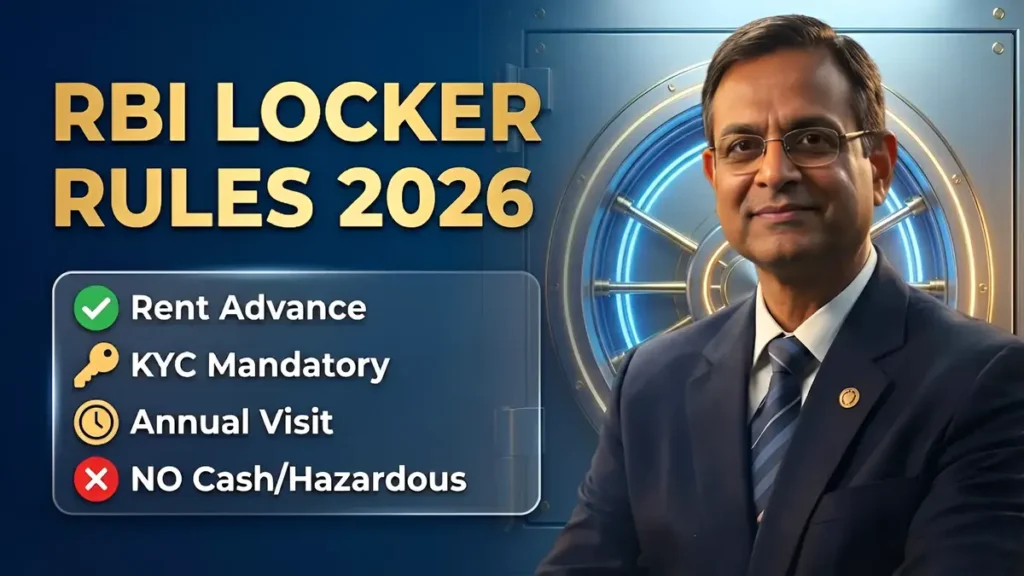
RBI Bank Locker Rules 2026: India’s banking customers are paying close attention to the latest locker regulations issued under the supervision of the Reserve Bank of India. With updated compliance norms, enhanced safety protocols, and a stronger liability framework, the 2026 locker rules aim to protect customer assets like never before. These revised standards are designed to increase transparency, reduce disputes, and ensure accountability across public and private sector banks. Here’s a clear, detailed breakdown of what every locker holder must understand this year.
Stronger Safety Mandate
The 2026 framework introduces tighter surveillance and infrastructure standards for bank locker facilities. Banks are now required to upgrade CCTV systems, maintain longer footage backups, and implement dual-control access systems. Biometric or advanced authentication processes are being encouraged to minimize unauthorized access. Regular safety audits and digital logs of locker operations must be maintained to improve traceability. These changes are focused on preventing theft, internal fraud, and operational negligence while building customer confidence in locker security systems nationwide.
100x Liability Shield
One of the most significant highlights is the reinforced liability clause. In cases of proven bank negligence leading to loss of locker contents, compensation can extend up to 100 times the annual locker rent. This liability cap strengthens consumer protection and ensures banks adopt stricter internal controls. However, losses caused by natural disasters or events beyond institutional control may not fall under full compensation coverage. Customers are encouraged to understand agreement terms carefully and maintain proper documentation for valuable assets.
Revised Agreement Format
All locker holders must now sign a standardized locker agreement aligned with updated compliance norms. The agreement clearly outlines rights, responsibilities, and liability conditions for both banks and customers. Existing customers may be required to renew or update documentation to match the new regulatory format. This standardized contract structure reduces ambiguity and ensures uniform practices across banking institutions. Transparent clauses regarding access, rent, termination, and risk coverage aim to eliminate confusion and legal disputes in the future.
KYC Compliance Tightened
Know Your Customer requirements have been reinforced under the 2026 locker guidelines. Banks must ensure updated KYC records for all locker holders, including joint account users and nominees. Inactive lockers may face restricted access if documentation remains incomplete. Customers are advised to verify PAN, Aadhaar, and address records with their respective banks. Stronger KYC norms enhance accountability and prevent misuse of locker facilities for unlawful financial activities, aligning locker operations with broader financial security standards.
Nominee Rights Expanded
The revised rules simplify procedures for nominees and legal heirs. In case of a locker holder’s death, banks must follow a time-bound process for granting access to registered nominees. Clear guidelines reduce procedural delays and legal complications. Nominees may access lockers after submitting required identity proof and documentation. This reform ensures that families are not subjected to prolonged uncertainty. Customers are strongly advised to update nominee details to avoid future disputes or administrative hurdles.
Access & Transparency Boost
Banks are now required to maintain detailed access records and notify customers about locker operations where feasible. Digital tracking systems and audit trails improve accountability. In certain cases, customers may receive alerts related to locker access activity. Branches must also maintain waiting lists transparently if locker availability is limited. These measures increase operational transparency and discourage favoritism or unfair allocation practices. Improved record-keeping benefits both customers and banking institutions in dispute resolution scenarios.
Fair Rent & Allotment
The updated framework promotes fairness in locker allotment and rent practices. Banks must publicly disclose locker availability policies and rental structures. Arbitrary denial of lockers to eligible customers is discouraged. Additionally, locker rent revisions must be communicated clearly in advance. Customers are encouraged to pay dues on time to avoid access restrictions. Transparent allotment norms reduce complaints and improve trust in the banking system while ensuring equal opportunity for locker applicants across regions.
Customer Responsibility Clause
While the rules enhance protection, customers also carry responsibilities. Locker holders must avoid storing prohibited or illegal items and ensure timely rent payments. Maintaining secrecy of locker keys or access credentials is crucial. In case of lost keys, banks may impose break-open charges as per policy. Customers should periodically verify locker status and keep documentation secure. Responsible usage, combined with regulatory safeguards, creates a balanced system of protection and accountability.
Final Word
The 2026 RBI locker reforms represent a major shift toward stronger consumer rights, tighter compliance, and improved institutional accountability. With enhanced liability coverage, clearer agreements, upgraded security, and better nominee rights, locker holders gain added confidence in safeguarding valuables. At the same time, stricter KYC and transparency norms strengthen the banking ecosystem. Customers should review updated agreements carefully and ensure documentation remains current to fully benefit from these protections under the evolving regulatory framework.
Disclaimer: This article is for informational purposes only. Readers should verify specific locker policies directly with their respective banks or refer to official notifications issued by the Reserve Bank of India for accurate and updated regulatory details.